The boy who stayed
“And he said to him, ‘Son, you are always with me, and all that I have is yours. It was right that we should make merry and be glad, for your brother was dead and is alive again, and was lost and is found.’ ” Luke 15: 31-33
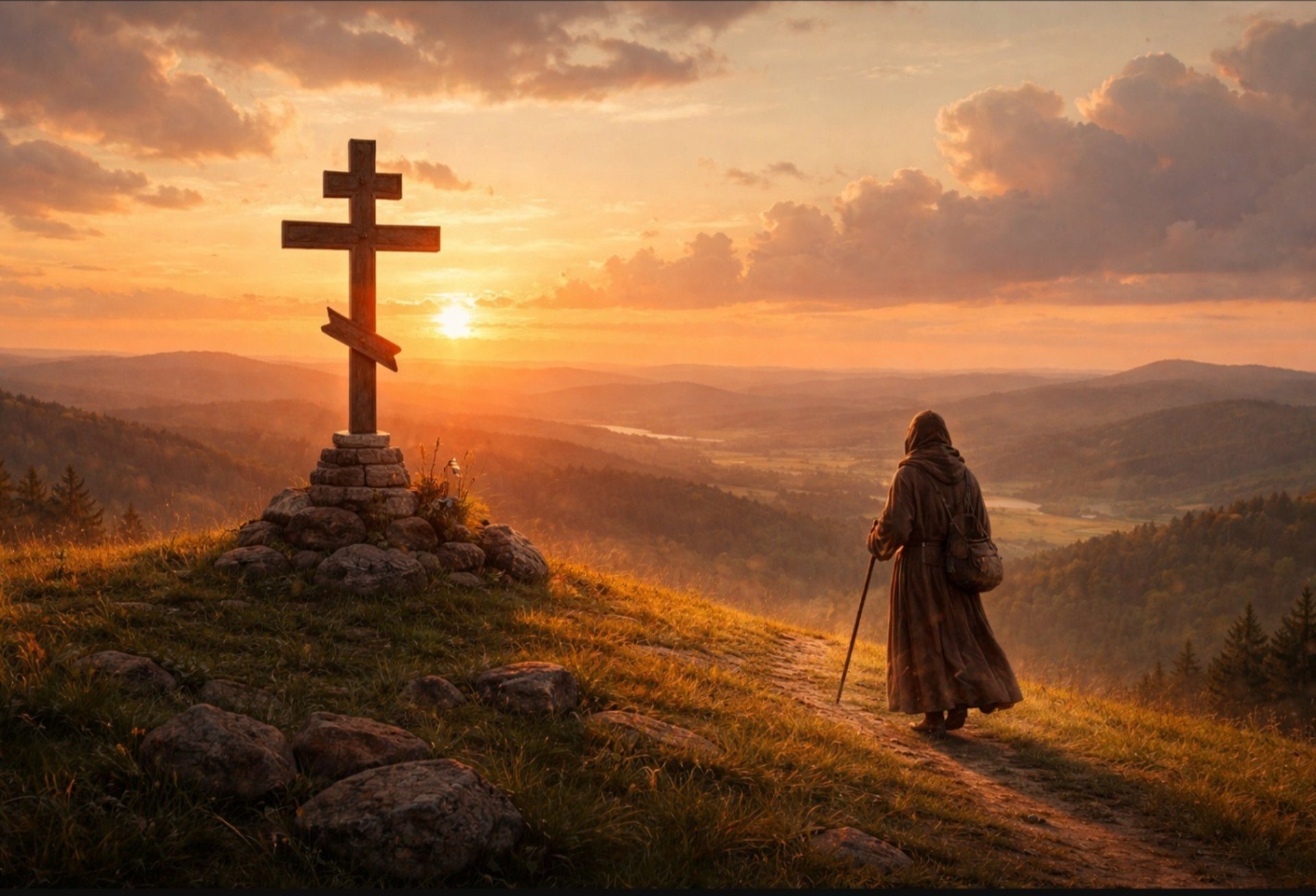
The road had bent low along the edge of a worked field when I first saw them.
A young man stood in a hard strip near the north side, trying with little success to break a stubborn patch of earth. He had strength in him, but not yet the ease that makes strength useful. Each strike of the mattock bit poorly, and the ground answered him with little more than dust and shallow wounds.
There are times when a man struggles because the work is simply difficult, and there are times when the work is only the foreshadow of more difficult things residing inside. I thought at first this might be the first kind. So, I stepped from the road and came nearer.
“Do you need another arm?” I asked the younger man.
He looked up, surprised enough that for a moment I thought he might say yes.
“If you mean to help, you’ve chosen the wrong man to ask.”
The young man rested his hands on the tip of the shovel, his eyes looked as every inch of me from head to toe, deciding what man I was to be. Unlucky for us both, I was not rather pleasing to look at, nor did my attire give the appearance of a laborer by trade.
“If you want to put your hands in another man’s work, ask the owner. He’s the one who decides such things.”
“You are right,” I said. “Where will I find him?”
He glanced past me toward the road and said, “Near the wagons. Beyond the rise.”
I nodded.
“Thank you.”
He did not answer. He only stepped aside, resetting his hands around his shovel with a quick spit he continued.
Past the hill, the land opened wider and I saw more clearly the order of the place. There were six caravans drawn up in a long, loose line near the outer yard of the manor, some still half-loaded from the morning gathering in town. Women moved between them with baskets and closely behind them children in tow giggling and shouting with joy. Older men sat or stood where the shade was kindest, watching, sorting, talking quietly among themselves. The bulk of the labor force was the young men in the field already, this much I gathered quickly.
It was a large household. Near fifty souls, perhaps more if there were hidden away completing the task within the innards of the compound. Even with the servants rushing here and there, I could not find a place where laziness resided. There was peace between the layers of chaos, but there was a hidden peace of a sort. A peace that comes when many lives have been long kept under one patient hand.
I found the owner near the second wagon, speaking to an older servant who held a ledger board and a length of rope over one shoulder. He was not working in the field. But as a steward of life and property, he sat delegating with an old wisdom of how best to utilize each part of his servants to bring calmness and production to its max capacity. He need not demand respect, for how the men and woman bowed kindly, or stopped to give a moments whisper or giggle before walking off was evident enough. His hand rested for a moment on the wagon rail as he listened, and like lighting across the night sky a little girl wandered too near the wheel, and with cat like reflexes he reached down and guided her back toward her mother without so much as breaking the thread of what he was hearing.
That was my first sight of him in his own place.
He turned before I was near enough to call out, as though he had the habit of noticing who moved toward him and why.
“Yes?” he said.
The tone was plain, but not cold. I bowed my head lightly. “I asked one of your men whether he needed help with the ground. He told me I’d do better asking the owner first.”
At restrained smile came across his face.
“Did he, now?”
“He did.”
“And was he warm about it?”
“No.”
That drew a fuller smile from him.
“Then you’ve met Micah.”
He said the name without irritation, without apology. Only with the ease of a man who has known the backs of his own hand, or a carpenter with the wisdom and experience of a tool gliding across a wooden plank.
I glanced back toward the north side of the field.
“He seems diligent.”
“He is,” he said.
The answer came quickly, and because it came quickly, I heard the care in it.
The older servant beside him gave me a brief nod and shifted his rope. “The north line’s harder ground, limestone or some hard clay bounds itself to the earth not wanting to let go.”
“So I saw,” I said.
The man before me studied me a little more closely then. Not suspiciously. More as a man might look at a stranger who has already entered his day at an unusual leisurely.
“You came looking for work?”
“I came looking to be useful, if I might.”
At this his face changed in a way hard to describe. Not shocked or surprised exactly. More like a warmth that had found something to rest upon.
“Well,” he said, “there’s no shortage of usefulness needed here. I have hired hands here, but most of the bulk work comes from my household servants.” He said using his hand to cover the vastness of his land.
One of the women passing with folded cloth called to him, “Master, shall I put the smaller children by Miriam’s cart or the side awning?”
“With Miriam,” he answered quickly. “The awning will heat by noon. Don’t want the little ones turning into raisins now do we?”
She nodded and went on.
The older servant beside him muttered, “And Eli tied the lower knot too tight again.”
“Then cut it and make him watch you retie it,” the man said. “He only learns through a quick smack upon the head.”
That won a laugh from the servant, who went off with his ledger and rope.
I watched him go, then looked again at the man before me.
The ease of his people around him told me almost more than his words had. They were not stiff before him. They did not scatter when he turned. Even their corrections from him seemed to leave them more upright than ashamed.
“You run a large house,” I said.
“I try not to let it run me first.”
The line was dry enough that I smiled despite myself.
He returned the smile, though his eyes remained thoughtful.
“Micah sent you to me,” he said. “Most men in his mood would have sent you away.”
“There seemed more in him than the words.”
At this he was quiet just long enough to show I had not spoken idly.
“Yes,” he said. “There usually is.”
I could not yet tell whether he was a believer.
There was no quick piety in his mouth, no polished manner of religious men eager to be recognized by their phrases. Yet something in him ached me all the same. A weariness perhaps, but not one that had turned sour. He felt to me like a man who had lived with care long enough that it had become part of the way he stood.
“If the work is still open,” I said, “I’ll take it.”
“It is open.”
He looked toward the north line once, then back to me.
“You may join them there. The wage is fair, the meal is honest, and the ground will not flatter you.”
“That sounds trustworthy.”
“It is at least truthful.”
Then, with that same warm steadiness I had already noticed in him, he added, “Go on, then. We’ll see by evening whether the earth was the hardest thing waiting for you.”
Another man might have said it as a joke and left it there. He said it lightly, but not emptily. There was something under it. Not enough to question, only enough to remember.
So I took the shovel handed to me by one of the house servants and turned back toward the ground where the younger man still battled viciously against earth that refused to bend to his will.
When I returned to the north side of the field with the shovel in hand, the younger servant had made little progress. The ground held true, even after time had passed, very little had been done to it minus clumps missing here and there yet the boys breathing had grown heavy enough that he now paused between strikes whether he wished to or not. He was not a poor worker. If anything, there was something almost severe in his precision. There was no wasted motion in the man, He did not swing wildly or carelessly, for the sun and earth would make him pay dearly, both knowing this well enough.
But when he saw me returning, he stopped. Not abruptly. More like a man who had already expected my return and had been waiting inwardly to see what shape it would take. His eyes went first to my face, then at once to the shovel in my hand.
He looked at it long enough that I thought at first he meant to say where I should stand.
Instead, he said, “He gave you the good one.”
I lowered my eyes to the shovel.
The handle was worn smooth from use, and the iron showed honest wear across the curved edges, but nothing in it struck me as remarkable.
“I don’t know that he did,” I said.
Micah stepped nearer and glanced once at the shovel still leaning where I had first seen him standing.
“He did.”
There was no fire in the words. Only that same cold certainty with which some men speak when they have already judged a thing true before grasping all its details.
So I looked more carefully and I set my shovel beside the other and took them both in hand, testing their weight, rocking each to examine the balance, the grain of the handles, the edge of the iron. If there was any difference between them, it was too small for any man to notice honestly before labor began. They were, for all useful purposes, the same.
I looked up at him.
“They seem equal enough.”
Micah’s face did not change, though something in it tightened.
“They are not.”
I held one out toward him.
“Then take this one instead.”
Micah did not even reach for the shovel.
“No.”
“If this one suits you better, you should have it.”
At that he gave the faintest shake of his head, and for the first time I heard something under the coldness not quite anger, but the wearied edge of a man too accustomed in inward despair to accept simple peace when it is offered him.
“Keep it,” he said. “It’s yours now.”
There are refusals that settle heavy matters, and others that reveal it. This was the latter of the two. So I lowered the shovel.
“As you wish.”
That answer seemed only to distance him further. He stepped back to his line, gripped his own shovel, and drove it into the earth with a force just short of drawing others attention. For a few moments the only sound between us was the strike iron against ground, the giving way of dry soil, and the younger servant’s rough breathing as he tried again against the ground.
But as I set foot and began my own work, I found my thoughts lingering less on the shovel and more on the servant pouring self-contempt in every swing. He had not wanted the better tool. I was nearly certain of that. Had there been a difference at all, he would still have refused the exchange. No, what troubled him was something else. Not possession, but the thought of unequal regard. He had looked at the shovel not as a laborer judges a tool, but as a man who measures what another has been given with envy.
And I thought then that some souls do not need a true slight to feel one. It is enough that they have grown used to looking for difference. Still, I said nothing. The hours passed beneath heat and dust.
By midday the sun had grown less friendly, and even the harder ground had begun to give off that dry warmth which rises back into a man’s face as he works. Micah had said little after the matter of the shovel, but from time to time I could feel in him that same envy, as though each task, each tool, each word given or withheld, found its place in some private accounting.
At last, the call for the meal came down from the upper yard. Tools were set aside. Men straightened slowly. Hands went to backs, shoulders, necks, small utterances of a hard days work wearing old bone and muscles. We made our way from the line toward to the shaded side of the manor that held long wooden tables calmly being prepped with food.
There was no disorder in it. The household had done this long enough that hunger did not need to turn men foolish. A place was made, cups were set, bread broke, bowls carried. Women moved among the tables with the easy rhythm of those who had served many such long days. Children were gathered on one side, opposite to the older men had already settled where the shade held thickest.
I took my place at the back without thinking much about it. It seemed the simplest thing. The line moved well enough, the food would not run away like a zebra fleeing a starving lion, and I had no wish to press myself forward where others had longer stood and worked than I. I had not stood there long before Micah came up behind me.
I felt him before he spoke.
“If you mean to eat with the hired men,” he said pointing across from us, “the front is there.”
I turned a little and looked where he meant. A shorter line of the day’s laborers had gathered nearer the first table, while behind and to the side of them where some household servants living under the roof waited more patiently where the line bent.
I said, “This seems a line as well.”
Micah’s eyes did not soften.
“It is.”
“Then my belly will be filled either way.”
That answer displeased him at once.
“That is not the point.”
I looked at him.
He kept his voice low, but it had sharpened.
“You were hired for the day. The others here belong to the house. You needn’t stand back with them.”
I understood him then, or rather I understood enough. It was not the waiting that troubled him. It was that I had accepted a place among those who remained, as though the kindness of the house might be entered without calculation.
So, I said to him in a quieted voice, “Kindness offered freely has no poor place in line.”
Micah’s face shifted, not with surprise, but with that restrained resentment of a man who finds his inward distinctions treated as lighter things than he believes them to be.
“The hired hands go first,” he said. “That is the custom.”
“Then let the custom pass over me.”
He stared at me for a moment.
“At least take what is yours,” he said at last.
There is heavier weight in the hidden places of his words, this was more than lunch. More than place in line.
I answered him gently, “It is not my way to rush toward kindness as though I feared it might change its mind.”
That struck him harder than I intended. He looked away first, and when he did, his mouth tightened in that familiar move I had seen earlier in the day, as though he had bitten down on something bitter and chosen not to spit it out in public. For a few moments neither of us spoke.
At last, he said very low, “You’ll learn.”
I looked at him.
“What will I learn?”
“That houses have their ways.”
“Yes,” I said. “And men have theirs.”
His eyes flicked toward me again. I could have left it there, but something in me would not. More from sorrow than from stubbornness. I added quietly, “You needn’t guard me from being treated kindly, Micah. I have no quarrel with waiting among those who are fed.”
That was the closest thing to a rebuke I had yet given him, and even then, it was not a hard one. But he heard it. His face cooled at once into a stillness some men wear when they feel too seen without intention. Without another word, he stepped out of the line and moved away toward the front, not rushed, but with the collected dignity of one unwilling to let the moment seem like retreat. I watched him go only a second before the line drew me forward again. I thought, as I received my bowl and bread at last, that some men can bear hunger with less trouble than they bear unmeasured grace.
We sat in the shade near the lower tables, each man with his bowl, his bread, and enough silence around him to remember the morning in his back and shoulders and that it would call their name soon enough again. The heat became more intense by then, but under the awning’s shadow there was some relief in the air.
Micah sat not far off, though not beside me. At length one of the older servants, a broad man with flour still clinging at the cuffs of his sleeve and face, leaned a little toward him and said low enough that those nearest heard easily, “Who is he?”
Micah did not look up from his bowl.
“A hired hand.”
“That much we gathered.”
The servant nodded slightly in my direction. “I mean what sort is he.”
Micah answered at once, too quickly. “The sort that gives people reasons to talk instead of work.”
That won no agreement.
The woman beside them frowned faintly. “He has been working.”
Micah kept eating paying no mind to her.
The servant with the flour on his cuff said, “Did he labor less than the rest of you?”
“No.”
“Does he strike the earth less than you?”
“No.”
“Then is he useless?”
Micah looked up at that, and there was a sharpness in him now that did not belong to the question.
“No.”
The servant shrugged slightly. “Then I fail to see the danger.”
Micah set his spoon down.
The woman beside him said, more gently than the others, “Did he wrong you?”
“No.”
“Then why are you chewing him harder than that bread?”
A few of those nearest smiled at that, though not cruelly. It was plain enough they saw Micah was off but did not yet feel what had set him there.
Micah’s hand opened once on the table, empty.
“He puts himself in places too easily,” he said.
“What places?” asked the flour stained servant.
Micah gestured vaguely. “Here. There. Wherever kindness is being handed out, he steps into it as if it were waiting on him.”
The woman looked at him strangely.
“Was it not?”
Micah gave her a hard look, but she did not lower her eyes.
One of the older men down the bench, who had been eating in silence up to then, said, “If a man is offered bread and takes bread, that is not usually counted against him.”
“That is not what I mean,” said Micah.
“Then what do you mean?”
That was the trouble. He did not know, or at least in an honest form he was willing to speak on.
At last he said, “He acts as though these things cost nothing.”
“What things?” asked the woman.
Micah’s hand opened once on the table again.
“The bread. The place. The warmth of it all. He comes for a day and moves about as if it all belonged to him in peace.”
No one spoke for a few breaths.
Then the broad servant with flour at his sleeve said, with puzzled honesty, “Maybe he only knows how to receive what’s given.”
That landed among them more heavily than he meant it to. Micah’s mouth tightened. The woman looked at him then not with annoyance, but with something near pity.
“He bothers you because he is not guarded,” she said.
Micah turned toward her at once. “No.”
But the denial came too quickly.
She tore a piece of bread and dipped it into her bowl before saying, “Or because he is.”
At this Micah looked away entirely. The servants fell quiet after that. Not because the matter was settled, but because they had gone as far as good manners would let them among others at table. Micah picked up his spoon again, though he seemed not to taste what he ate. At the end of the meal Micah rose before the rest of us had finished. He stood too quickly, set down his bowl harder than he intended to, and turned from the bench. But as he passed behind me, his eyes came once to mine not openly sharp, but with that colder thing which lingers after a man has been internally shook in a place he would rather keep unrattled.
Then he went back toward the field.
One of the household servants watched him go and muttered, “There goes sunshine itself.”
A few at the bench laughed in the brief dry way men laugh when they mean to ease a room by making smaller the hardest person in it.
Another said, “Aye. If he gets much warmer, we’ll all have to strip down to survive him.”
That drew more smiles. I looked in the direction Micah had gone, then back to the table.
I did not wish to scold them. The room did not need that. I only said, “Some men leave the table because they are finished eating. Others because they cannot bear what came to them while sitting there.”
The laughter died on its own.
The thickset servant with flour still at his cuff rubbed once at his beard and said, “Well. That sours the joke a little.”
I smiled faintly. “Only if it needed souring.”
That won a warmer breath from the table. The woman beside him looked at me with quiet attention.
“You pity him,” she said.
“Yes.”
A heavier set servant frowned. “Even after the way he’s carried on all morning with you?”
“Especially then,” I said. That left them quieter than before.
The older man with the careful hands, who had spoken little through the meal, said, “It is easier to pity a man when his trouble wears a cleaner face.”
“Yes,” I said. “And easier to judge him when it leaks on everyone nearby.”
The woman leaned her forearms lightly against the table.
“And what then? Do we pretend his trouble touches no one?”
“No,” I said. “But perhaps we remember that the heart does not break in one pattern only. Today it may be Micah. Tomorrow it may be one of us, only with a wound easier to excuse.”
No one answered at once.
The heavier servant spoke again as he stared into his bowl moving around small grains and said, “So we are to leave off speaking of him as though he were the only hard man at the table.”
I looked at him and said, “I think we are to leave off speaking as though our own hardness would always look better in daylight.”
The woman lowered her eyes for a moment, then lifted them again.
“That is true,” she said softly.
The younger servant at the far end of the bench, who had mostly listened, asked me, “Were you never like him?”
“I have not been him,” I said. “But I have been wrong in ways that felt justified to me at the time. A man does not need the pangs of a same wound to stand under the same mercy. We all know draw inwardly to ourselves. We all know how to defend what is hurting badly.”
Another servant, a middle aged man kissed by the suns heat to many days let out a breath through his nose. “I had three sharp things ready to say about him before he left.”
“And now?” I asked.
“Now they seem smaller than I meant them to.”
The older man nodded while staring off into the blue sky above, “That may be because they were.”
The woman broke a piece of bread and turned it between her fingers.
“You have a way of bringing peace to a table,” she said.
I shook my head gently. “No. I think the peace was already near enough for you to feel it. You quieted your voice from speaking over it.”
The thickset servant said, “Well, whatever it is, I feel less eager to win against a man who isn’t even here.”
“That is already something good,” I said.
For a few breaths we were all quiet then, and it seemed to me that the bench had grown gentler. No one had found an answer. No one had solved Micah. But the room no longer sat so comfortably in judgment of him, and that alone felt like mercy.
I finished the last of my meal, wiped my bowl, and set it with the others.
As I straightened, I saw Matthias standing a little way off in the shade near the third wagon. He did not call to me. He only lifted two fingers slightly in a small gesture that asked without summoning.
So I went to him.
He led me only a short distance from the tables, far enough that the voices behind us softened into the ordinary hum of a midday meal. We stood near a stack of bundled stakes and lumber. For a little while he said nothing.
Then he said, “I found him when he was a boy.”
He did not need to say the name.
“Right there, south road in the late winter. The poor lad was thin enough that the wind had a better claim on him than flesh did, and death danced around him waiting to draw near. Even in hunger, he wore a face of unchecked endurance and softness not yet taught how to ask without fighting the shame of it.” His face softened with the troubled memory, though sadly. “I meant to keep him one night. Bread, broth, a place by the fire. Then on he would go when strength returned.”
He rested one hand lumber.
“One night became years.”
I listened, not wishing to interrupt a man troubling himself with the understanding of his heart speaking loudly to his mind.
“He has lacked for very little here,” Matthias said. “Food, work, and a place to sleep. Whatever I had honestly to give him, I gave gladly.” He lowered his eyes briefly. “still I do not know how to help him now.”
The aged wisdom he once showed earlier was absent now, he tussled with something that seemed to pry at him countlessly. It was the grief of a man who loved another and could not find the place where love had begun to go cold in being received.
“When he was younger,” he said, “warmth reached him. Correction too, when needed. Even silence did, at times. Now… now when I draw near, I feel something in him cool. I do not know whether I stand too close to him or too far off. I do not know whether I have missed some turning in him altogether.”
I let his words rest.
Then I said, “It is no small thing that you have not grown tired of wanting to understand him.”
Matthias let out a brief breath.
“I do not know how to stop.”
“That is hope,” I said nodding. “Even if it does not feel like hope.”
He looked at me then, and I think something in him eased simply by hearing that the part of him which still leaned toward Micah had not been foolishness.
I went on carefully.
“There are some troubles a man cannot force into daylight. And there are wounds that close tighter when they feel a hand trying too hard to open them. But a fire kept faithfully is no small mercy to a man who has forgotten what warmth is for.”
At that he was silent for a long moment.
When he finally spoke, it was low.
“I do not have the answer to him.”
“No,” I said. “But you have not lost your heart toward him. That matters more than you think.”
He turned his eyes toward the field.
For a while we stood in silence.
Then Matthias said, “Go on back. The ground is hard enough without us leaving it too long to its own thoughts.”
So I returned toward the field, carrying not an answer, but a quieter sense of where the wound might lie. When I returned to the north line, I found that the earth was no longer the thing most resisting the day.
Micah was not digging.
He sat on the low rise beside the broken strip with his elbows on his knees and his head bowed, the shovel resting near one boot where he had let it fall rather than set it down. For a few moments I said nothing.
I only walked back to my place and stood there with the shovel still in my hand, letting the wind move lightly through the dry grass and the sounds of the field continue around us as though neither of us were under inspection. After a little while I drew closer to him, though not so near as to crowd him. I did not ask what troubled him nor did I ask whether he was weary, ashamed, or angry. Questions spoken too quickly often feel like hands where only presence is needed.
I only stood beside him and let silence do what words often ruin.
Micah lifted his head at last, but only enough to look at me sidelong.
“You’ve come to save the afternoon too?”
His voice had lost some of the earlier edge. Not because he had grown kinder, but because weariness had taken some strength from his sharpness.
“No,” I said. “Only to return to it.”
He looked down again, then reached suddenly for both shovels mine and his dragging them toward himself with a roughness that resided somewhere between a quite anger and play. He held them up one after the other, weighing them as though the matter of them still deserved trial.
Then he said, “Since you know peace so well, choose your shovel and see if the ground listens to your empty words.”
The line might have been crueler in another man. In Micah it came out as something more tiring than venomous, like an insult built from old habits and fresh discomfort mixed.
I looked at the shovels in his hands. He had gone back to them. That alone told me enough.
I set my own hand lightly on the nearer one and said, “If the ground ever listens, it will not be because of me.”
Micah gave a short breath through his nose.
“There. More of it.”
“More of what?”
“That. Those smooth little answers.”
I nodded once.
“They can sound that way, I suppose.”
This seemed to check him more than if I had defended myself.
At length I said, “You needn’t prove the ground hard to me, Micah. I’ve eyes enough for that.”
For the first time he looked at me fully.
“And what else have you got eyes for?”
It was not fully his truest thoughts, but it was nearer honesty than most of what he had given me all day.
I answered it gently.
“For a man having a harder time with himself than with the field.”
His face changed at once, though subtly. The old guardedness came back into it, but not quickly enough to hide that the words had found him. He looked away and thrust one of the shovels toward me.
“Take your tool.”
I took it.
He kept the other across his knees and said, “You talk like every burden is a doorway to something peaceful.”
“No.”
“No?”
“No. Some burdens are only burdens until the head finds a resting place at evening.”
That pulled the faintest unwilling bend at the corner of his mouth. Not quite a smile. More the memory of one trying not to happen. I saw it and made nothing of it.
Then I said, “But a man doesn’t have to fight himself and the earth in the same hour if he can help it.”
Micah stared ahead at the line of ground before us.
“And if he can’t help it?”
“Then he does what he can with one and waits on the other.”
At length Micah stood. He planted the shovel once into the earth beside him and said, without looking at me, “You speak like a man who thinks too kindly of people.”
I let out a soft chuckle, remembering the days of my old self, “I’ve thought worse before.”
“Maybe you should have stayed there.”
“Maybe,” I said.
He exhaled and shook his head then he stepped back into his line and drove the shovel down, this time with less violence than before. I joined him in mine, and for a while we worked without speaking, the heat felt from him earlier had been slightly cool, not enough to draw too near for a fire could still burn even if it was merely and ember.
It was the one o’clock bell; a steady clang carried across the field and cart path alike. I lifted my head at the sound and looked toward the road. Beyond the rise, a small group of men, ten in total had come into view with a weary look across them accompanied with dust on their boots and that uncertain pace of those who have not yet been told whether the day will feed them or send them onward again.
A house boy ran out from the yard to meet them and point them toward the wagons. Micah saw them too. He drove his shovel fiercely once into the ground, stopped, and let out a short breath through his nose.
“Of course,” he said.
I looked at him. “Of course, what?”
“More hands.”
He said it as another man might say, more rain or more flies.
“The road keeps delivering them.”
I glanced toward the newcomers again.
“They look tired enough.”
“That helps.”
“How?”
“It makes men remember.”
There was something in the way he said it that kept me from answering too quickly.
He pulled the shovel free and set it again, not digging so much as giving his hands something to do while the thought passed through him.
“The passing ones come in worn down,” he said. “Dust on them, hunger in them, no place to go by evening if they’re not taken in. People can’t help but soften at the sight of it. A bowl feels fuller in the hand when it’s being given to a stranger.”
I turned a little of the earth before speaking.
“And that troubles you.”
He gave me a look.
“It should trouble anyone with eyes.”
“Should it?”
“Yes. A man can wear himself thin in the same ground every day and become part of the fence line for all the notice he gets. But let one come in from nowhere with dread and dirt plastered on his face and suddenly he’s treated like the day would be poorer without him.”
That was as near the heart of it as he had yet come. But I did not press there.
Instead, I asked, “Have you been here long?”
He was quiet.
“Long enough.”
I waited. He frowned a little, as if already regretting having said even that much.
Then, perhaps because silence can ask harder things than words, he added, “Since I was young.”
That was all.
I said, “Then you know the place well.”
He gave a short, humorless breath.
“I know what it asks of a man.”
His words carried further into my mind though I believe it was not his intention. I pondered on it taking notice that he did not say what it gives, only what it asks.
I heard the omission but left it alone. The new men were being met by the wagons now. One of them stumbled slightly as he stepped off the road. Another stood with the empty, careful posture of a man trying not to look too hopeful before he had reason to cry out for joy.
Micah watched them a moment longer.
Then he said, lower now, “Some men arrive and are seen. Others stay and disappear.”
The sentence might have been meant for me, or for the earth, or only for himself. I could not tell. I answered it lightly enough not to corner him.
“Staying has a way of becoming ordinary in every place.”
He looked at me.
“Yes,” he said. “It does.”
For a few moments we worked in silence again.
Then I asked, “Were you brought here?”
He stopped.
“At first,” he said. “Yes.”
I knew enough of what Matthias had told me earlier, yet not enough to touch it further at this moment. I only nodded.
After some little while he said, not looking at me, “You ask quiet questions.”
“I try to.”
“They’re worse than loud ones.”
That brought the faintest smile to me.
“I’ll remember that.”
He shook his head once, almost as if annoyed that I would not defend myself properly.
Then he said, “grab your shovel and dig. The road’s given them enough attention for one afternoon.” I did, and the afternoon passed with very few words.
Whatever had been stirred between us earlier seemed to settle into the labor itself. Micah spoke no more than was needed, and I did not trouble the silence. Occasionally, a servant farther down the line muttered once or twice at the ground, and somewhere beyond us a commotion rang out of a wagon wheel being replaced. But around our section of the trench the hours moved in that plain, dry hush that comes when men are too occupied with their hands to risk much speech.
The sun had begun its slow descent by the time the evening bell rang. We made our way back toward the side of the manor we came to earlier for lunch where the evening meal had been laid out. This time Micah did not go forward. He hung back.
Not so far that another man would utter upon it, perhaps, but enough that I saw it. He let two of the hired men pass, then one of the household servants, then another. By the time I found my own place, he had settled himself near the end.
Matthias stood there among the tables, not seated, not rested, but moving from man to man with the bowls in hand alongside two of the women from the house and one of the older servants. He was serving them himself.
He did not do it ceremoniously; there was no performance in him. He simply moved down the line as though it was the most natural thing in the world to make sure each soul under his keeping was fed with his own hands near at the end of the day.
To one man he said, “You’re limping more than you were at noon.”
To another, “Sit nearer the shade tomorrow if the heat takes you so early.”
To one of the younger boys, “Don’t carry your shoulders so high, a fool believes tension is strength.”
And each one received from him not only the bowl, but the quiet dignity of being noticed.
When he came to me, he handed me mine and gave the smallest nod.
His eyes rested on me for only a moment, but I felt in them a kind of question wanting to be asked or hope of one who has seen a little light and is wondering whether it will reach farther than he dares expect.
I could offer him nothing large. I only inclined my head in return. He seemed to understand that and passed on. Micah remained near the back all through it.
He did not draw near, not allowing attention to be drawn to him. He simply waited, though I could feel even from where I sat that his waiting was not restful. It carried the image of tension I had noticed earlier in the ditch, irritation and a quiet disgust clothed him as though being left to the end wounded him and yet coming earlier would have wounded him differently. We ate then in the cool light.
At the end of the meal, as the last of the light began to turn gold against the wagons and field edge, Matthias called the hired men and servants to line before him. They came without reluctance.
I learned then that before wages were given, he looked each man over himself, not with the cold inspection of one safeguarding his property, but with the practical kindness of a great steward of men unwilling to let injuries go hidden until night made them worse. Hands were shown. Arms lifted. One man was told to have a wrist bound before sleep. Another was told to keep off a strained ankle at dawn if it swelled by morning.
Then, when he had done that, he gave wages into their hands. Not carelessly as if the money pained him when departing from his palm, but with a peaceful grace placing the coin into each palm himself and thanked each one for the day’s work.
“Good labor.”
“You kept at it well.”
“The field was heavier than I’d hoped. You bore it honestly.”
“Thank you for the day.”
I received mine in turn. He placed the coin in my palm and said only, “The work was honest.”
“That it was,” I answered bowing my head slightly. He nodded once, and I stepped aside.
The men who had already been paid began drifting together in the loose little huddle common to laborers at day’s end, some counting their coin by touch, some speaking of where they would sleep, some only glad enough to be finished that words seemed unnecessary.
Micah was last, and he came forward without haste and stood before Matthias with the collected look of a man already preparing himself inwardly against some slight not yet offered. But Matthias did not place coin in his hand, he only looked him over with the same careful eye he had given the others, then reached and patted him once on the upper arm.
“Draw your bath tonight,” he said. “You’re carrying the whole field home on your skin, don’t forget to wash properly before you sit down. The dust has taken enough from you for one day.”
The words were gentle, even fatherly. Not harsh, or rebuking, only warm in that easy way some men have when affection has become part of habit.
It struck Micah differently. I saw it immediately the way his face held still just a breath too long, the way his jaw shifted and hurt rose in him before anger covered it. It was not the bath. Not dust. No, I believe it was that Matthias had touched him with that old familiar care in full view of others, and whatever ought to have been intended as comfort seemed to him instead some mixture of quite dismissal and injury he himself did not know how to bear. Matthias either did not see it or saw it and refused to withdraw the kindness for that reason. He lifted his voice to the rest of us.
“The trench still waits patiently for another days work,” he said. “Those willing, return tomorrow. We’ve more ground to open yet.”
A few of the hired men nodded at once. One laughed and said the earth would be disappointed if he did not return to insult, it again. Another tucked away his coin and said he’d be there with daylight scurrying off into the night with a shine to his smile that could rival the brightness of the moon.
But I found my eyes going again to Micah. He had stepped back from Matthias already. Not rudely. Not openly. Yet I could see in him that same old struggle, only more raw, more honest now. It was not just anger that betrayed his peace but wounded by something he could neither accuse plainly nor accept honestly.
When the men had broken off in ones and twos and the road had begun to swallow them back into evening, I found my own way out beyond the town and to a strip of ground near a low stand of trees where the wind was kinder than in the open.
I sat there with the day’s coin in my hand for a while before lying down.
It was more than I had expected to earn, and because it was more, I found my thoughts turning not first to myself but back to the field. Toward those who worked hard and true under the sun. I remember how unforgiving the work can be to soft hands, its hard truth rewarded in the blisters I had seen opened in their palms and the tiredness carried in their shoulders. I thought to myself that in the morning, God willing the markets opened early enough, I would buy more bread. Perhaps dried figs or a little cheese if the price allowed it. Maybe ointment too, if any coin remained after.
The thought brought me some quiet. Then, before I went to sleep, I knelt. The ground was cool beneath my knees, and the sounds of the town had gone softer by then. I bowed my head and prayed. Not eloquently, God had no time for men wasting words on pleasantries, I simply asked for help.
For Micah. For Matthias. For my own heart, that I might not mistake gentleness for usefulness or confuse patience with wisdom. My heart knew something of Micah’s pain, though not his exact road. I had been lost in the world once in ways that were invisible to others. I had thought of myself first, defended myself first, judged from the small throne of my own burdens and hurt. A man does not forget that wholly, he only learns, if mercy reaches him, not to call it home.
When I had finished, I bowed lower still, then lay down and gave my eyes to rest and the darkness of the night.
It had felt only if I had closed my eyes for a moment before sleep had surrendered to the morning sunrise. I smiled; warmth is never a thing to turn and rebel against. Tiredly I rose from the cold ground and gave thanks to God for one more day to walk upon his roads. I set out to the city to see what lay in the markets.
It was only beginning to stir when I reached it. A few stalls were still boarded up, others had just begun the slow business of becoming themselves.
At the bread stall I found an older woman stacking loaves.
“How much for three?” I asked.
“For the round loaves?”
“Yes.”
She named the price.
I counted the coin into her hand and said, “And what of the smaller ones?”
“If you’ve coin left, take two more. They’ll do me no good by waiting on my board.”
“That sounds like kindness.”
“That sounds like good sense,” she replied, though not unkindly.
I took the loaves.
Farther down I found a man selling cloths, salves, and small household things from a cart that smelled strongly of oil and herbs.
“You’ve anything for blisters?” I asked him.
He looked at my hands first, then my robe, then the bread under my arm.
“For you?”
“For men who work harder than they care for themselves.”
At this he grunted and reached beneath the cart.
“Ointment. Not much, but enough. Don’t waste it on skin that’s only complaining.”
“I’ll try to tell the skin the difference.” Bowing my head slightly.
That earned me the faintest crack of a smile.
By the time I left the town again, the sun had risen enough to warm the edges of the road. When I came to Matthias’s grounds, many of the servants were already outside the lower yard. Some stood near the wagons, some by the tool racks, some finishing the last of their morning bread. The younger hired men from the day before were there too, along with a few new faces and not far from them Micah stood eagerly watching each.
He saw me as soon as I stepped through the outer line. Then one of yesterday’s hired men, the younger one with the quick eyes said, “He came back.”
The thickset servant with flour often found more on himself then the baking board broke into a full smile.
“With bread, unless I’ve gone blind in the night.”
I set the loaves on the edge of an upturned crate and said, “There was enough coin after the day to buy a little more than my own breakfast, and I thought the field might hold it against us if more men stood before it well nourished.”
It was not much but it was enough. The men came to it with the unashamed gratitude of laborers. Bread was broken, thanks given. One of the older servants muttered that I’d ruin them all by making the morning feel like a feast. The ointment too was quickly noticed when I set it out.
“For hands that lost the fight yesterday,” I said.
At that the thickset servant laughed. “Then it’s not enough for all of us.”
The woman from the day before, Miriam, looked at the little jar and then at me.
“God keep you,” she said at last.
I bowed my head slightly. “He has.”
The hired men took up their shovels after that with a better spirit than before. Matthias had by then come out from the yard. He greeted the men briefly, watched the bread pass from hand to hand, and looked at me with a warmth that held gratitude and something else too perhaps that same cautious hope I had seen in him before.
But he did not speak long of it. Instead, he began setting the lines for the day.
“North trench again,” he said. “And farther up this time. The lower section will hold if the channel is widened before the sun begins setting west.”
He named the men one by one, placed them where he wished, and at last said, “Micah. Take him farther up the line. The upper ground needs opening.”
He did not need to say who “him” was. Micah looked at him, then at me.
There was no protest. Only that old guardedness returning to his face as he lifted his shovel and turned toward the northern hill where the trench ran narrower and more alone. I followed him. We walked a little way without speaking, the noise of the others falling behind us little by little until only the sound of our own steps and the distant work remained.
At last Micah said, without looking at me, “Do you always come back?”
“No.”
“But you came back here.”
“Yes.”
“With bread.”
“Yes.”
That irritated him, though not in the same way as I had seen the day prior, here there was less contempt in it now and more suspicion.
“Why?”
“Because I had the means.”
“That’s not an answer.”
“It is the first one.”
He stopped where the new section of ground began and set the blade into the dirt before turning toward me.
“No one spends his wage on men he met yesterday unless he wants something.”
“What do you think I want?” I asked.
He gave a short, humorless breath.
“That’s what I’m asking you.”
I set my shovel down beside his and answered him plainly.
“I thought the bread would be useful. I thought the ointment might ease a few hands. And I thought returning would be better than not. ”
Micah stared at me as though trying to find the hidden hook in words that offered him none.
“No man thinks like that for free.”
I looked at him a moment.
“Then perhaps no man has done it for you for free.”
He did not like that. But he did not lash out.
Instead he looked away toward the upper stretch of dry ground and said, lower now, “You speak as though kindness were easy.”
“No.”
“No?”
“No. Only worth keeping when it can be.”
He looked at me again.
“You’re not what you look like.”
“And what do I look like?”
“A man with no reason to understand anything hard.”
I bent, setting the tip of the shovel it into the earth.
“That would be a pleasant thing to have been.”
For the first time that morning, he had no quick reply. For a while we worked in silence. Then he stopped, planted the shovel into the soil, and leaned one forearm against the handle.
“How are you still like this?”
I looked over.
“Like what?”
He frowned, already displeased that he had asked badly.
“Like this. Warm. Open-handed. At peace with people who have no claim on you.”
I said nothing yet.
Micah went on.
“No man stays kind for no reason. So which is it? Do you do it because you like being thought well of? Or because you think God sees it and lifts you a little higher for it?”
The words were hard, but not from a pkace of wickedness. Beneath them I could hear something more desperate like the voice of a man trying to find a bargain behind goodness because he cannot yet believe goodness survives without one. I rested my hands on the top of the shovel.
“No,” I said. “Neither of those.”
Micah looked unconvinced at once.
“Then why?”
I drew a breath before answering.
“Because I’ve wanted things from men before. Approval. Soft words. The comfort of being thought better than I was. And I have wanted things from God wrongly too, not God Himself, but the feeling of being safer, holier, less small than I knew myself to be.”
“And what cured you of it?” he asked.
“Nothing so complete as that. But life helped.”
That made him impatient. “I’m asking plainly.”
“So am I.”
He stared at me.
Then I said, more softly, “I do not think God has any reason to look at me more kindly than He does another man.”
Micah’s face changed.
“What do you mean?”
I looked down at the broken earth between us.
“I mean I have no greatness to offer Him. No righteousness to place before Him and say, “come, loom and see me above the others. If I have done any good in this life, it has usually been after doing some worse thing first, or else by mercy that reached me before I had sense enough to ask for it.”
Micah said nothing.
I went on. “The truth is, I deserve very little beyond the ground I’ll one day be laid in. And even then, if justice were left only to me, perhaps I’d deserve to lie atop of it rather than under, as a warning to any who stumble upon me”.
He did not smile.
“You don’t believe that.”
“I do.”
“No. No man speaks that way unless he wants to sound humble.”
I looked at him and said, “That may be true of some men. But I know what I am without mercy.”
He held my gaze a moment longer than before.
“You really think God sees no more in you than in me?”
There was hurt in the question. Old hurt.
So I answered it carefully.
“I think God sees more truly in both of us than either of us can bear to see in ourselves.”
Micah’s jaw shifted.
“That is not the same answer.”
“No,” I said. “It is the truer one.”
He looked away first.
At length he said, “Then why do you act as though He has been kinder to you?”
I set the shovel into the ground and worked a stubborn piece of earth loose before answering.
“Because He has been kinder to me than I deserve.”
Micah turned back at once.
“And not to me?”
There it was.
“I didn’t say that.”
“Then what did you say?”
“I said mercy humbles a man if he receives it honestly. But if he receives it another way, it may trouble him. It may even make him restless. Especially if he has lived near it long enough to stop calling it mercy.”
Micah stared at me.
“You speak as though you know me.”
“I don’t.”
“Then stop speaking as if you do.”
I nodded once. “That is fair.”
Then, after a while, he added, “Why should God not look at you more? You do good. You give. You speak gently. You make men like you. Why should that not raise you?”
I met his eyes.
“Because none of those things made me.”
He frowned.
“If a thirsty man is handed water and later gives another man a cup from the same stream, should he boast that the water is now his virtue?”
Micah said nothing.
“I did not make whatever peace you think you see in me. I was given it in small pieces, to small to take notice all at once. Even After enough years of making a worse thing of myself. So if there is warmth in me, it does not place me above you. It only condemns me if I pretend I lit it.”
That met him strangely.
“What if a man has lived near the stream and still feels dry?” he asked very low.
I did not answer quickly.
I sat for several more moments before answering, “Then perhaps he has been drinking with a closed mouth.”
Micah’s face tightened again, but not against me , against the thought itself.
“That sounds impossible.”
“Yes,” I said. “For some things, it nearly is.”
He stood there in silence.
Then, after a while, I added, “A heart can learn strange ways of guarding itself. Even against what keeps it alive.”
That was as far as I dared go. Micah drew a slow breath through his nose, turned away from me, and gripped the shovel again.
Then he struck the ground too hard.
The iron hit something buried beneath the dry crust, maybe stone or some old stubbornness the earth had hidden for years, and the shock ran up the handle so sharply that even I felt it in my own hands. The wood cracked near the neck with a sound like a dry bone breaking. Micah stared at it one breath, then wrenched the shovel free and flung it aside into the dirt.
It landed badly and spun once.
For a moment he said nothing. Then all at once the thing in him tore loose.
“Of course,” he said. “Of course.”
He turned half from me, half toward the field, as though the whole day had become something he could not find a clean direction to accuse.
“I work. I stay. I’m here before dawn and after dark if it’s needed. I carry what is given. I do not wander in from the road with a hungry face and a good story. I do not need to be found, fed, praised, or welcomed. I am simply here.” He laughed once, yet it was absent of joy. “And still it is always the same.”
I said nothing.
“He sees them. He sees you. The weary one from the road, the passing hand, the man with dust on his face and some quiet answer on his tongue. There is warmth in the eyes for that. Bread in the hand for that. A word fit to hold in the chest for that.” He struck his own sternum once. “But I am here every day, and what am I? Another tool in the yard. Another back in the field. Another pair of hands expected where they’ve always been.”
He stopped then, breathing hard.
I let the silence remain a little while. At length I stepped nearer and set my own shovel down.
“Micah,” I said.
He did not look at me.
“No,” he said. “Do not start smoothing this over. Not now.”
“I wasn’t going to.”
That checked him enough that he glanced at me from the corner of his eye.
“You are hurt,” I said.
He almost laughed again.
“And you’ve only now noticed?”
“I noticed before. Now you’ve stopped hiding it.”
That landed. I went on softly.
“You say he does not see you. But I have watched him. He sees the boy limping before he speaks. He sees the old man favoring his wrist. He sees when a bowl is too light and when a shoulder is too stiff. He saw the dust on you before you reached the line last night. He told you to draw your bath because he knew the whole field had come home on your skin.”
Micah’s jaw shifted.
“That is not the same.”
“No,” I said. “It is not loud.”
That made him turn to me fully. There was pain in his face now plain enough that I no longer had to search for it.
“You don’t understand,” he said.
“Then help me.”
He stared at me.
I looked toward the road where the new travelers had come in earlier. Some were still visible from this crest of the hill, thin men with road bent shoulders and the careful posture of those who have learned to hope lightly.
“When you were a boy,” I said, “and he found you hungry, half-frozen, and unsure whether a hand offering bread might close against you again, but now I asked you… which of those men would you have traded places with so that others might admire your need more openly?”
Micah said nothing.
At last he said, but only barely, “None.”
“No,” I said. “None.”
His throat worked once.
“You were taken in by mercy, Micah. Not by wages. Not by merit. Not because you had proved yourself worth the keeping. You were hungry, and you were loved. You were cold, and you were brought near warmth. You feared being thrown out, and instead you were given a place.”
His eyes had lowered by then.
“Years pass. Labor piles up. The body grows familiar with the table, the bed, the roof, the hand that has always made room. what once felt like rescue can begin, little by little, to feel like the ordinary shape of things. A man forgets how frightened he once was to lose what he now resents not being praised for.”
That reached him more deeply than he wanted it to.
I drew closwer, “Your reward has not been absent, Micah. It just did not come to you in the form your pride can easily display.”
His eyes filled then, not fully with tears, but with that heavy brightness that comes before men who have not wept in the open for years.
“The travelers come and go,” I said. “They are greeted because they are passing through visible need. But you… you have been kept. Fed. Known. Corrected. Washed in care daily that you have begun to call it air and then wonder why no one praises you for breathing.”
He covered his eyes once with his hand and dragged it down over his face.
“Mercy given is never worked for,” I said. “That is why it is mercy. And those blessed enough to receive it are safest when they learn to let it go freely to those around them. Otherwise they begin to clutch even at what was never theirs by right.”
Micah’s shoulders had gone slack by then.
I looked again toward the lower yard and the road beyond it.
“If you see only yourself in mercy, you will lose track of how much you still need it. And then the sight of it falling on another man will come to you in injury instead of joy.”
Micah stood utterly still.
Then, very low, he said, “I stayed.”
“Yes,” I said. “You stayed.”
“And that should mean something.”
“It does.”
He looked up at me quickly, almost angrily, but too broken now to sustain anger well.
“but what of it?”
“It means you were loved long enough to forget your beginning.”
That was the blow. Not cruel. True.
He turned away from me then and sat hard on the low rise beside the trench, elbows on his knees, head bowed. One hand covered his mouth. The other hung loose between his legs, empty.
I stood near him and said nothing for a while.
The first tear did not fall dramatically. It only darkened the dust beneath him.
When he finally spoke, it came through a voice made smaller by shame.
“I used to think every meal might be my last in that house.”
I kept my silence, for a heart grieving must be given room to speak freely.
“He would call me in, and even when I was fed I would keep half the bread hidden because I thought by morning I might be put back on the road.”
His shoulders moved once with a breath that nearly broke.
“And now…”
He could not finish it.
So I finished the nothingness for him.
I knelt enough to set the broken shovel upright in the dirt and said, “Then remember the boy. Do not give hardness of the man you are now room to bury the boy who knew what mercy felt like.”
Micah’s hand covered his eyes fully then.
I did not touch him. I only stayed there, near enough that he would not be alone inside the breaking of it. He looked at me once more before asking leave.
It was not the old look. Not guarded, not cold, not measuring. Only tired, raw, and strangely young. For a moment I could see the boy in him more clearly than the man.
“I should go,” he said.
I nodded. “Go.”
He dipped his head once and turned away.
I watched him cross the field. He went neither quickly nor slowly, but as a man goes when something in him has at last broken loose and he does not yet know whether the breaking has harmed him or healed him.
I took up the work again.
The shift wore on quietly after that. The day settled into that plain rhythm by which labor carries men until evening whether they are ready or not. I found that my own heart was quieter too.
At last the evening bell rang.
It sounded over field and yard alike, and all along the trench men straightened, lowered their tools, and made their way in. The work remained unfinished, as honest and true work often does yet enough had been done for one day.
I walked in with the others, dust on my robe and the ache of the day in my back, and as I came near the yard I lifted my eyes and saw something that stopped me where I stood for a breath.
Micah was there beside Matthias.
Not behind him. Not apart from him. Beside him.
They sat near awning, in the cooling light, speaking quietly to one another. Matthias had given him a new tunic I could tell at once by the clean stitching and the stronger cloth, not gaudy, not costly in the way rich men count cost, but well-made and chosen with care. Micah wore it awkwardly, as men wear gifts when they are not yet used to feeling themselves worth the fit of them. Yet he wore it nonetheless .
And he was smiling.
Not broadly. Not like a man suddenly remade into ease. But with that deep and fragile softness which appears when a heart, long clenched, has remembered warmth and does not yet know how to bear it without trembling.
Matthias looked up first and saw me.
He did not call out. He only held my gaze for the briefest moment and bowed his head, just slightly.
Micah saw me then and did the same.
No word passed between us, yet I understood the thanks in Matthias’s eyes and the humility in Micah’s. They were not thanking me for a cure. No such thing had happened. They were only thanking God, perhaps, that the frost had not proven eternal.
Then the meal began in its usual way.
Bowls were passed. Bread was broken. Men were looked over for blisters, strains, and the silent foolishness by which laborers try to hide what should be washed and bound before morning. Matthias gave wages into their hands one by one, thanking each man for the day. I received mine in turn. He placed the coin in my palm and said only, “You worked cleanly.”
“Thank you,” I said.
He smiled, and that was enough.
When the line had thinned and the hired hands began drifting toward the road and the town beyond, I bowed my head once more to Matthias and turned toward the gate.
The evening air had cooled. A little gold still clung to the top of the horizon and the farther fence posts. I had gone no more than a few steps when I heard someone behind me.
“Pilgrim.”
I turned.
Micah had come after me.
He had the new tunic on still, and over one arm he carried a cloak. He came to a stop before me and for a moment said nothing.
At length he said, “I could not let you go as though this day had been ordinary.”
I waited.
“My heart has grown hard,” he said.
There was no defense in the words. This alone moved me.
He went on more quietly.
“Not all at once. Not in a way I ever noticed cleanly. It was only little things at first. A burden remembered too carefully. A kindness received too often and no longer thanked for. A thought that another man was seen more than I was. A thought that staying should have bought me something more than nearness.” He gave the smallest, saddest breath. “I told myself I was only tired. Only overlooked. Only honest about the weight of things. But I have been keeping a poor account, and it has made me poor.”
I said nothing, for he was speaking from the place of rejuvenation itself now.
He looked down at the cloak over his arm.
“I do not know that I am changed so greatly as all that,” he said. “I know only that I have seen enough light today to be ashamed of the dark I had begun calling wisdom.”
For a small moment I had a love grow within me that matthias had for the boy.
He looked at me then more fully.
“I thought often, when I was younger, that I might still be put out. Even after years. Even after meals enough to fill me. Even after work enough to prove I was useful. Some part of me kept listening for the door to close.” His throat tightened. “Perhaps that is why I became so hungry for signs. For praise. For being marked out. Something in me wanted to be told, loudly enough for everyone to hear, that I would not be sent away.”
So I answered him as gently as I could.
“There are fears that survive long after the danger has passed. They do not leave because they are unreasonable. They leave because they are answered again and again, until at last the heart grows tired of mistrusting kindness.”
Micah nodded slowly.
“Yes,” he said. “Perhaps mine is only now beginning to tire.”
He looked toward the road, then back at me.
“And you… where will you sleep tonight?”
The question was so simple that it broke me a little.
I smiled. “Wherever God lets the dark find me.”
“That is no answer.”
“It is the one I have.”
He frowned, but with concern now rather than challenge.
“You shouldn’t be out with only that robe. The nights will cool more before long.”
Then he lifted the cloak between us.
“Take this.”
I looked at it, then at him.
“I could not take such a fine gift as this.”
He almost smiled. “You refuse too quickly.”
“It’s yours.”
He shook his head.
“No. It was given to me.” He touched the cloth once, almost reverently. “And for the first time in a long while, I know that a gift does not shrink by being passed on in love.”
I did not reach for it.
“Micah—”
But he stepped closer and held it toward me more firmly.
“Please,” he said, and now his voice had thickened. “Do not make me hold it as I held everything else, as though mercy were safest when kept close and counted often. Let me give one thing freely before my fear returns to argue with me.”
That was too honest to refuse.
So I took the cloak.
It was well made. Strong at the seams, lined more carefully than a day laborer’s garment usually is, the kind of thing chosen not for vanity but because the one giving it wanted the body inside it kept warm.
I held it in both hands and said, “Then I receive it in love.”
Micah bowed his head once, and the relief in him was almost painful to see.
After a moment he said, “You told me mercy is never worked for.”
“Yes.”
“I think I have lived as though it was, and when I could not make it wages, I tried to make it proof.” He gave a small, shaken laugh. “That is a miserable trade.”
“It is.”
He nodded.
“But now I think… no. I do not think. I only know this: I was starving in a full house and calling myself faithful because I stayed near the table.” He looked back toward the yard where Matthias still stood speaking to one of the older servants. “He has loved me better than I have understood.”
“Yes,” I said.
“And I have feared other men being fed because I had forgotten I was once one of them.”
I did not answer at once.
At last I said, “Then keep that boy near you, Micah. Not to shame the man you are becoming, but to keep him from forgetting how mercy first felt.”
His eyes lowered.
“I will try.”
“That is enough for one evening.”
He drew a breath, steadier now.
Then, with that same fragile honesty still on him, he said, “I do not know what tomorrow will make of me.”
“No.”
“But I do not want to return to what I was this morning.”
“That too is enough.”
He nodded.
For a little while neither of us spoke. The gate stood open behind me. The evening wind moved softly through the grass at the road’s edge.
At last Micah said, “I was angry that you came from the road and were welcomed.”
“Yes.”
“And now I am troubled that you go back to it.”
I could not help but smile.
“That is improvement of a sort.”
This time he smiled too small, wet-eyed, and wholly real.
Then he stepped back.
“Go in peace,” he said.
“And you.”
I bowed my head to him, and he to me.
Then I turned and passed through the gate, the cloak over my arm and the evening widening before me.
When I looked back once from the road, he was still there in the last of the light, no longer cold-eyed and exact, but simply a man standing where mercy had found him again, not finished, not flawless, not yet free of sorrow, only warmed enough to begin changing.
And I thought as I went on that there are some hearts which do not need thunder to break them, only a steady hand, an old love remembered, and one small opening through which forgotten light may enter again.